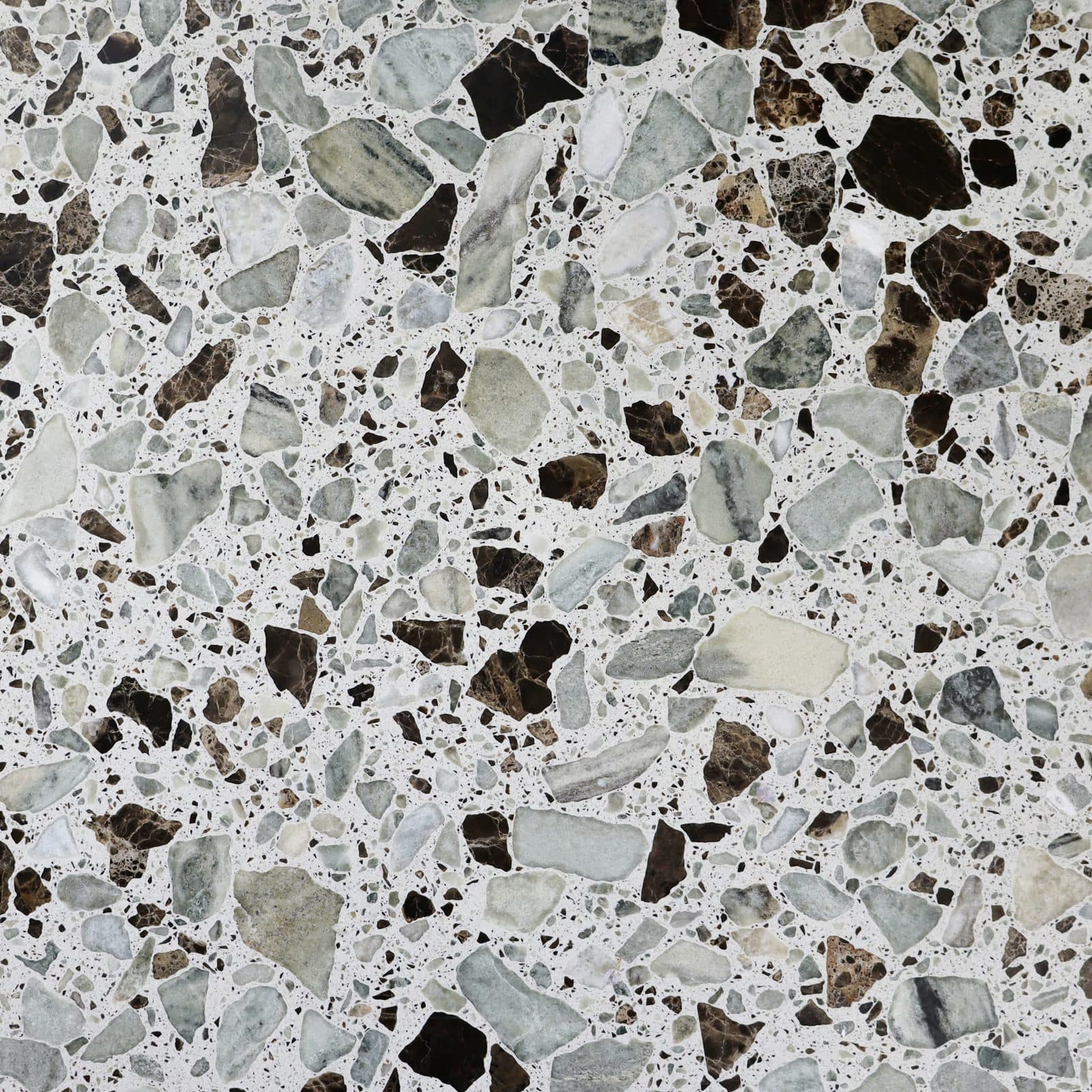
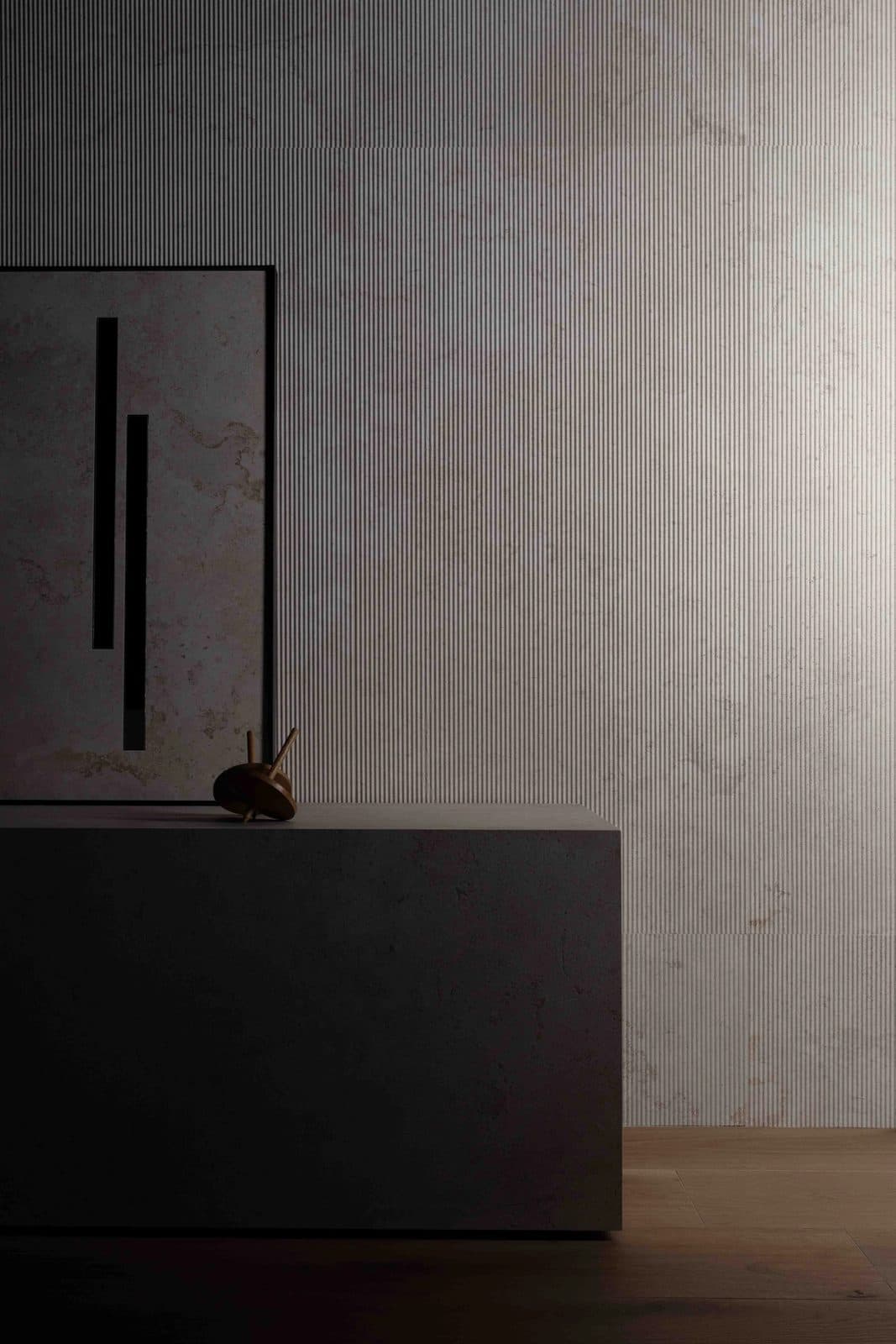
Natural stone, marble & terrazzo
High-end marble, travertine and terrazzo in Paris 16e and 17e. Calacatta, Thassos, Nero Marquina, Grolla, Lioz, Estremoz. Italian Marmi and Portuguese RMC cutters. By appointment.
Showroom since 2012 — Paris 16e Passy & Paris 17e Brunel — by appointment
Marine Naccache, Managing Director, Atelier Matière
The stone we distribute is cut from quarry-selected blocks by two houses we have known for over ten years: Marmi, an Italian stone cutter, and Petra Stones, an independent wholesaler. Alongside them, RMC, the Portuguese terrazzo manufacturer, works Estremoz, Lioz, Moleanos and Marquina inclusions into polished composite slabs. We offer the Western classics (Calacatta Oro, Statuario, Thassos, Nero Marquina, Carrara) as well as rarer stones — Grolla veronese, Italian limestones, Alpine grey stones — and Roman travertines in brushed, chapeado, honed or polished finishes. Every stone is unique: we work on bookmatch, continuous veining, and block-by-block setting-out.
Natural stone covers every architectural use: floor, wall, kitchen or bathroom worktop, fireplace, staircase, façade, pool coping. Standard thicknesses are 2 cm for most cladding, 3 cm for worktops and heavy-traffic floors, 4 cm or more for massive solid pieces. A water and oil-repellent treatment is systematic for surfaces exposed to water or grease. In our Passy (16e) and Brunel (17e) showrooms, we display samples cut at a useful size (minimum 20×20 cm) so the veining can be read at true scale. Marine Naccache and the team guide interior architects, decorators and clients through block-by-block selection, often via direct quarry visits.
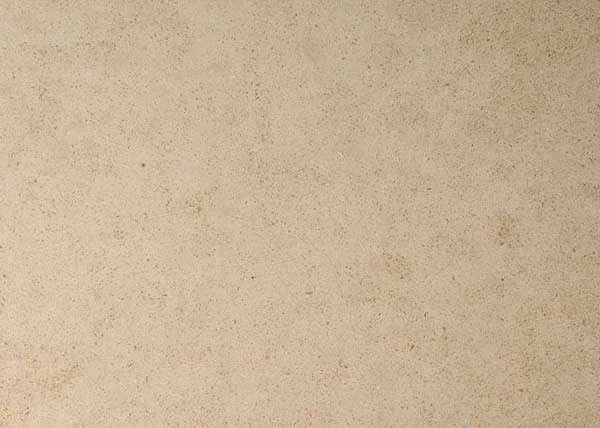
Limestone Effe

Grolla Rosato
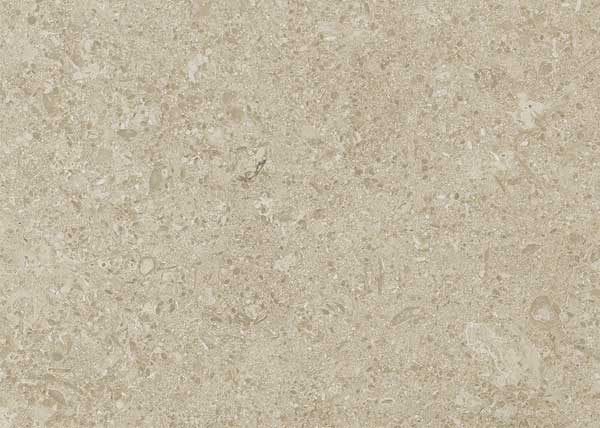
Grolla Beige
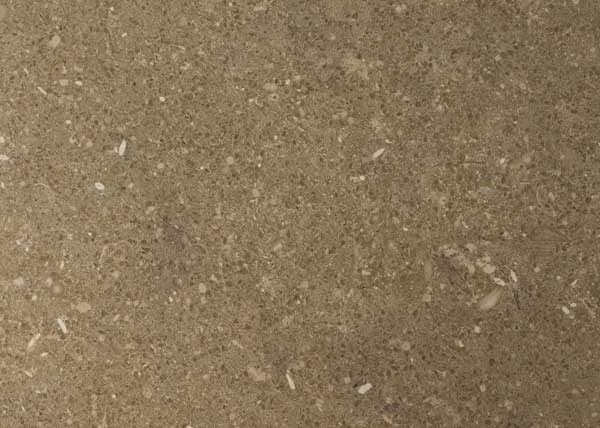
Grigio Olivio

Grigio Carnico
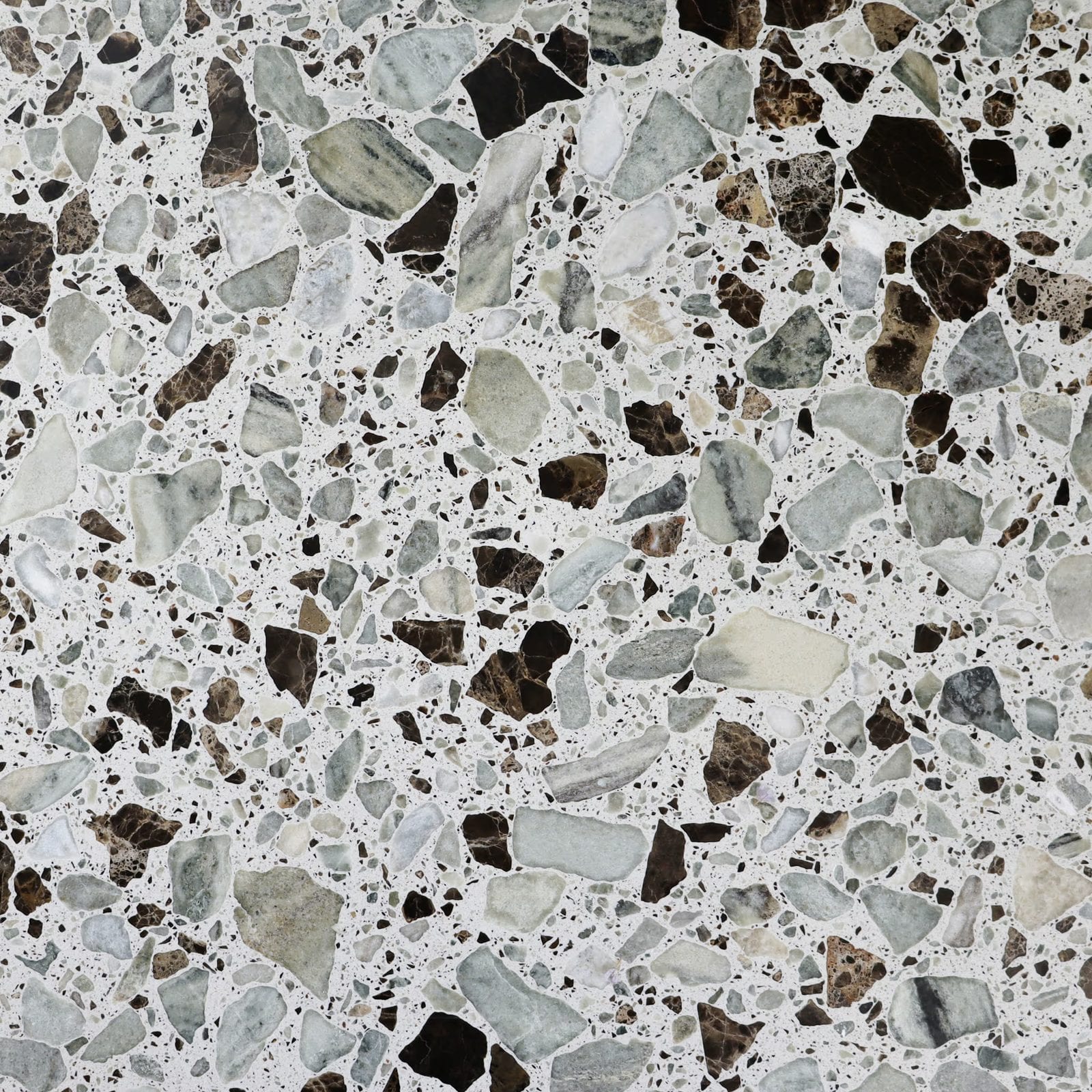
Amazonia

Bege Estremoz

Branco Estremoz

Cinza Estremoz
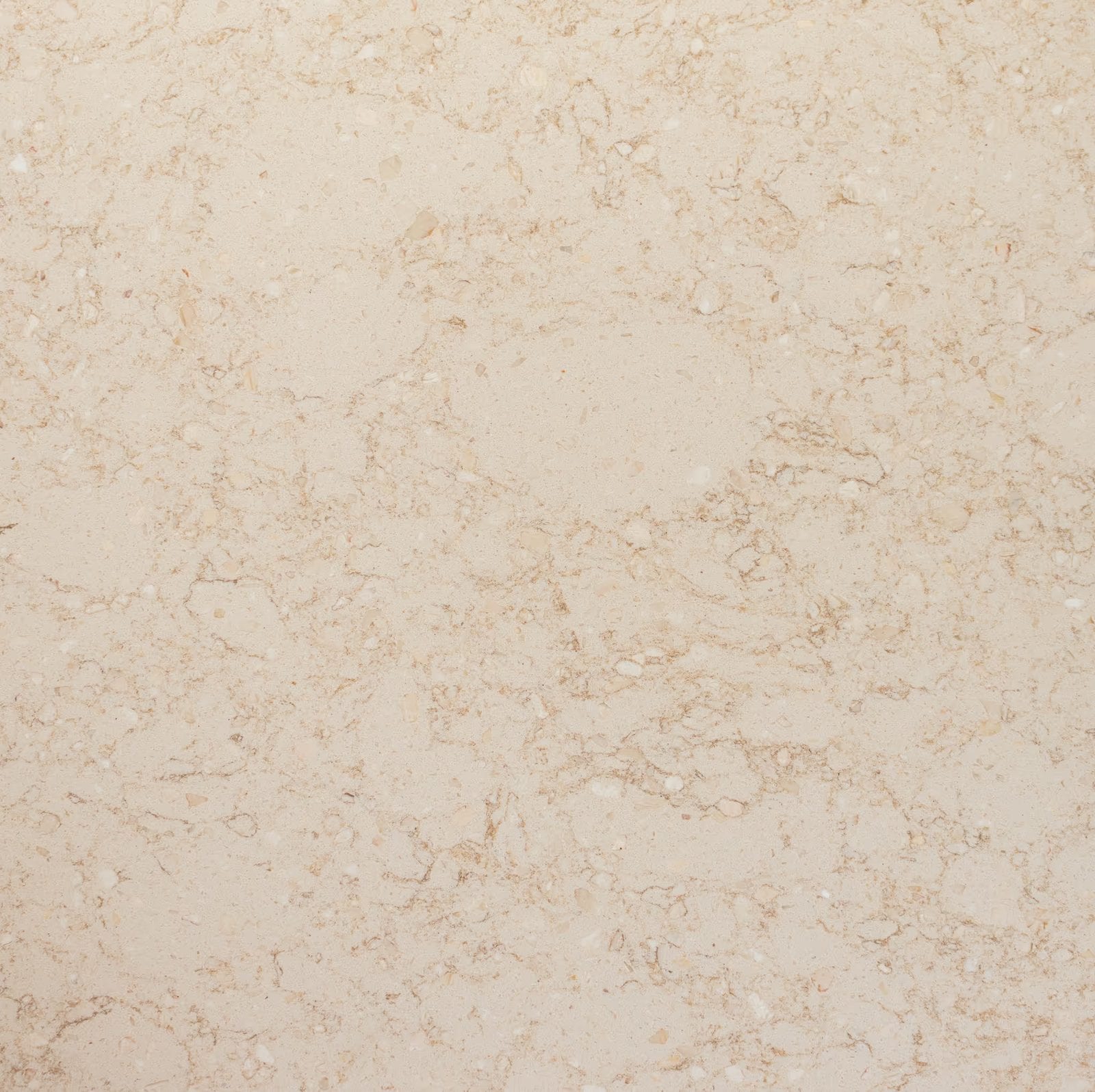
Crema Lagoa

Encarnado
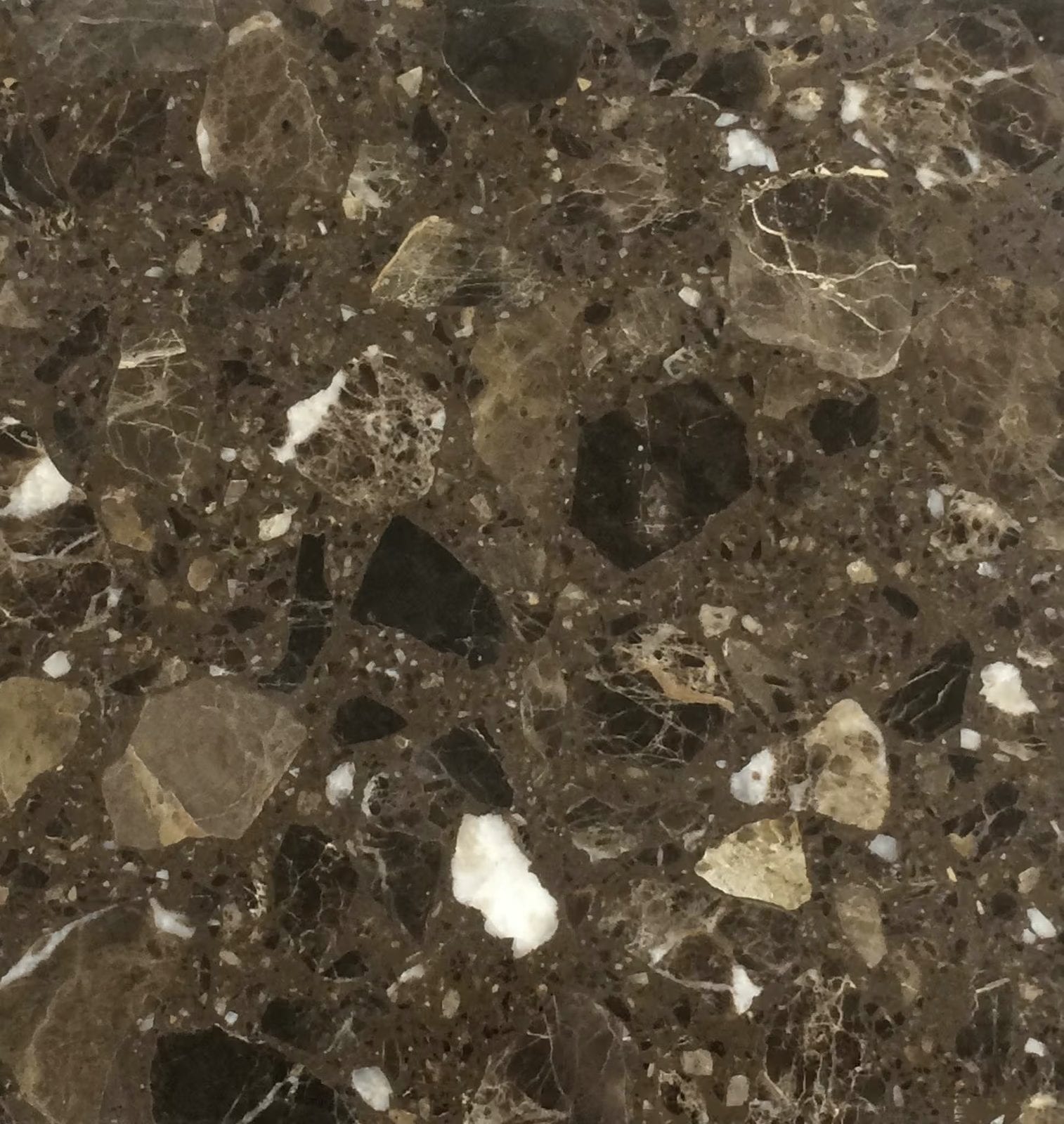
Imperador

Imperial White

Jupiter Original
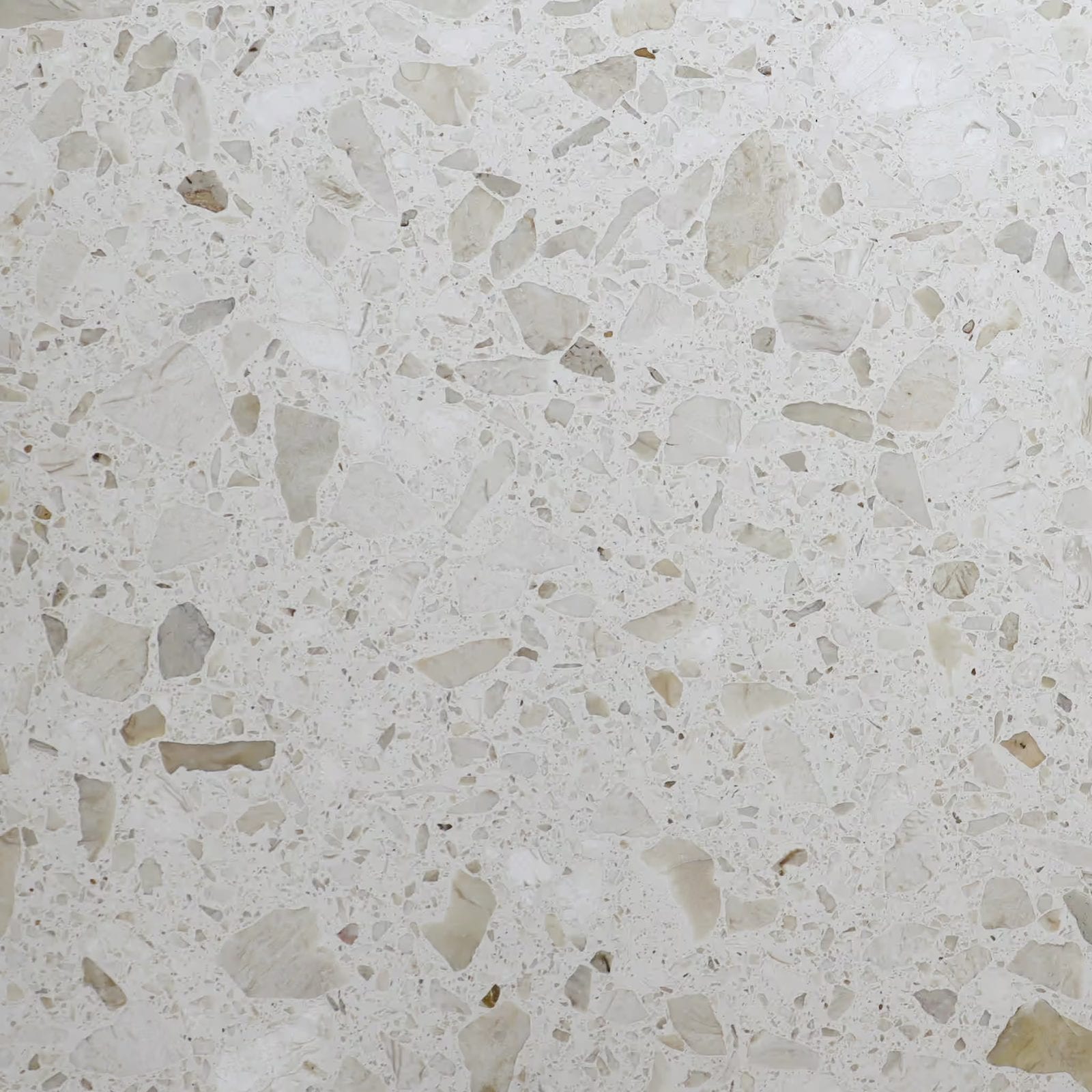
Lioz Sintra

Luso Night Fall
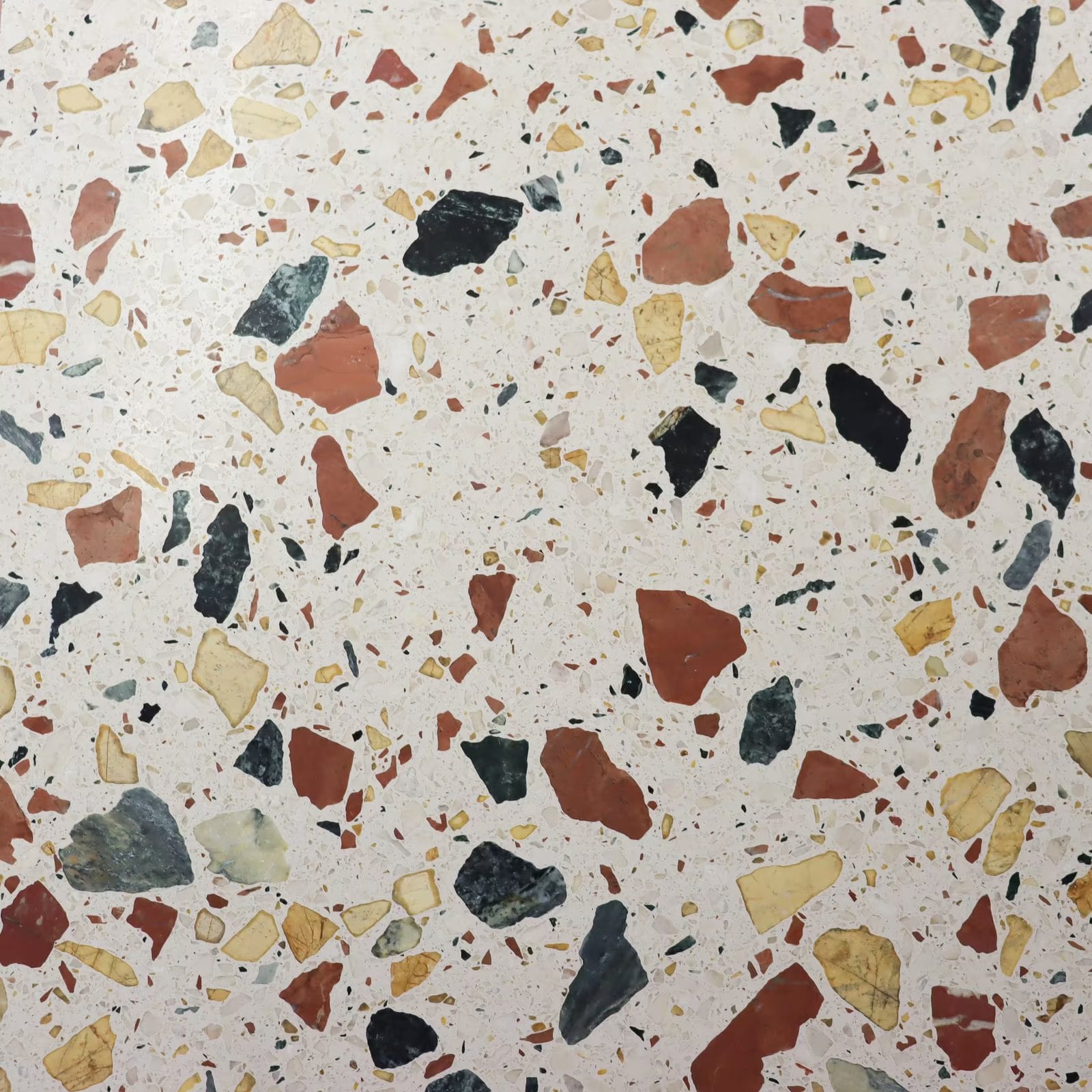
Luso Sunrise
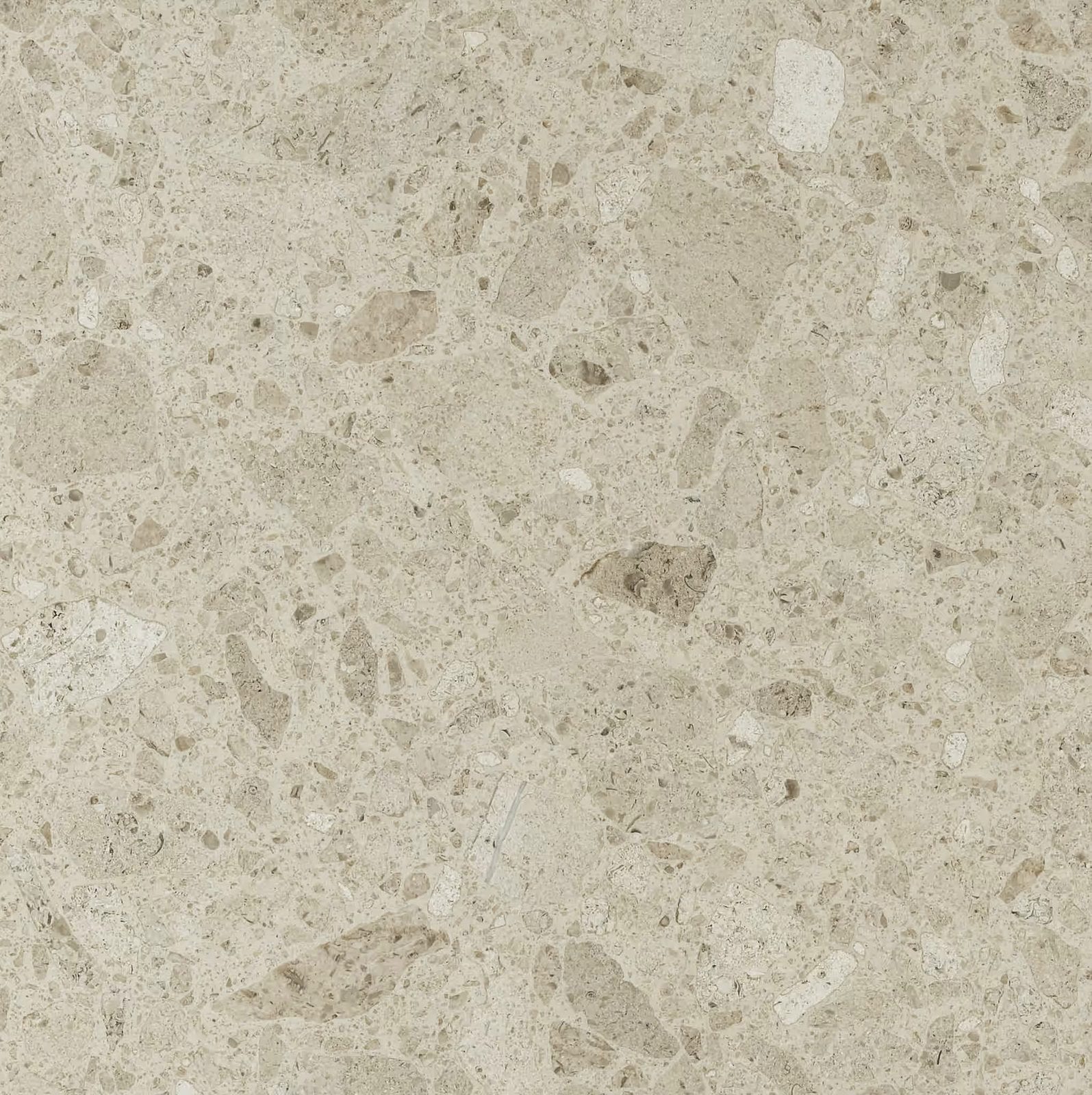
Moleanos Original
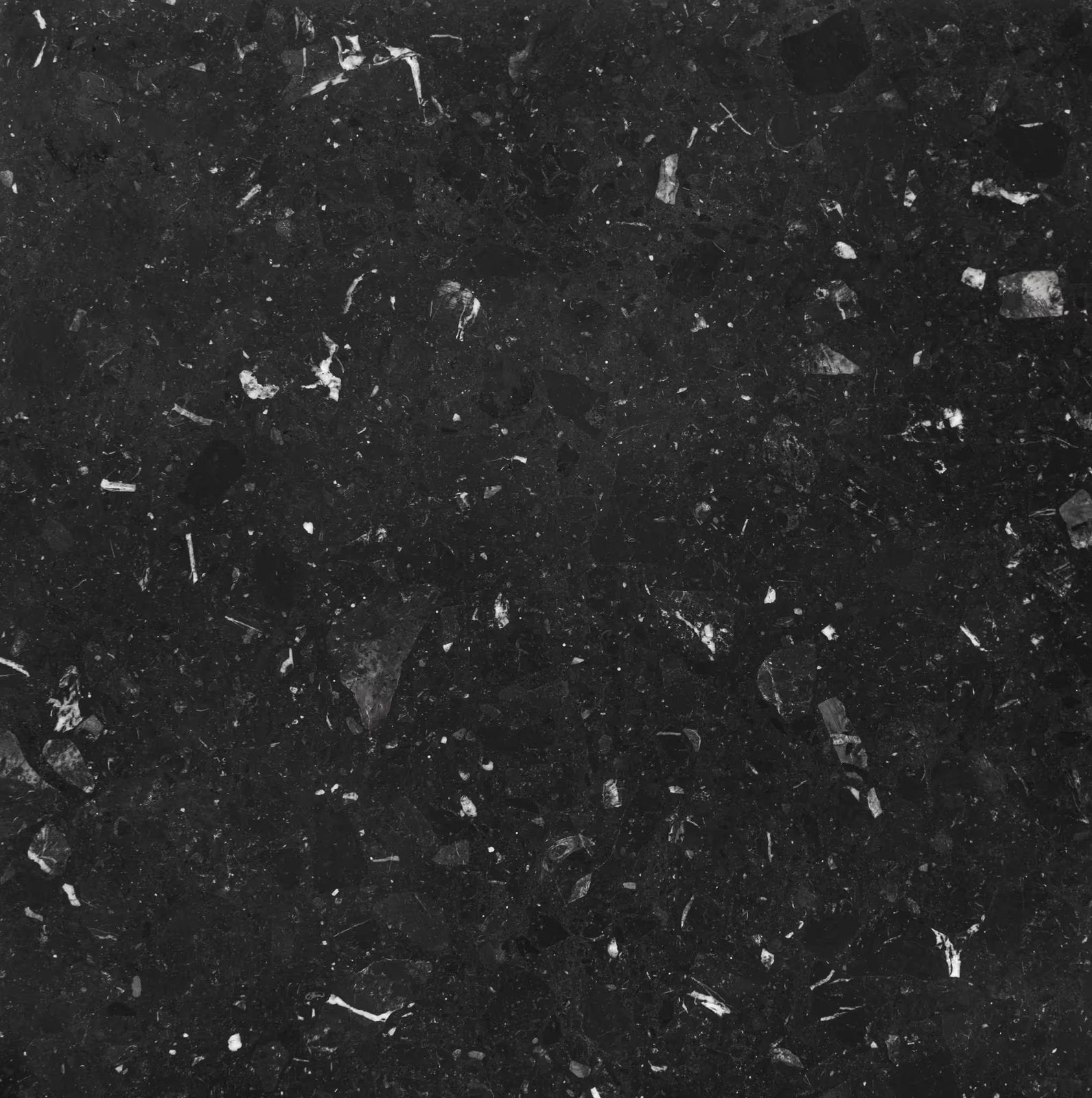
Preto Marquina

Rosa Estremoz
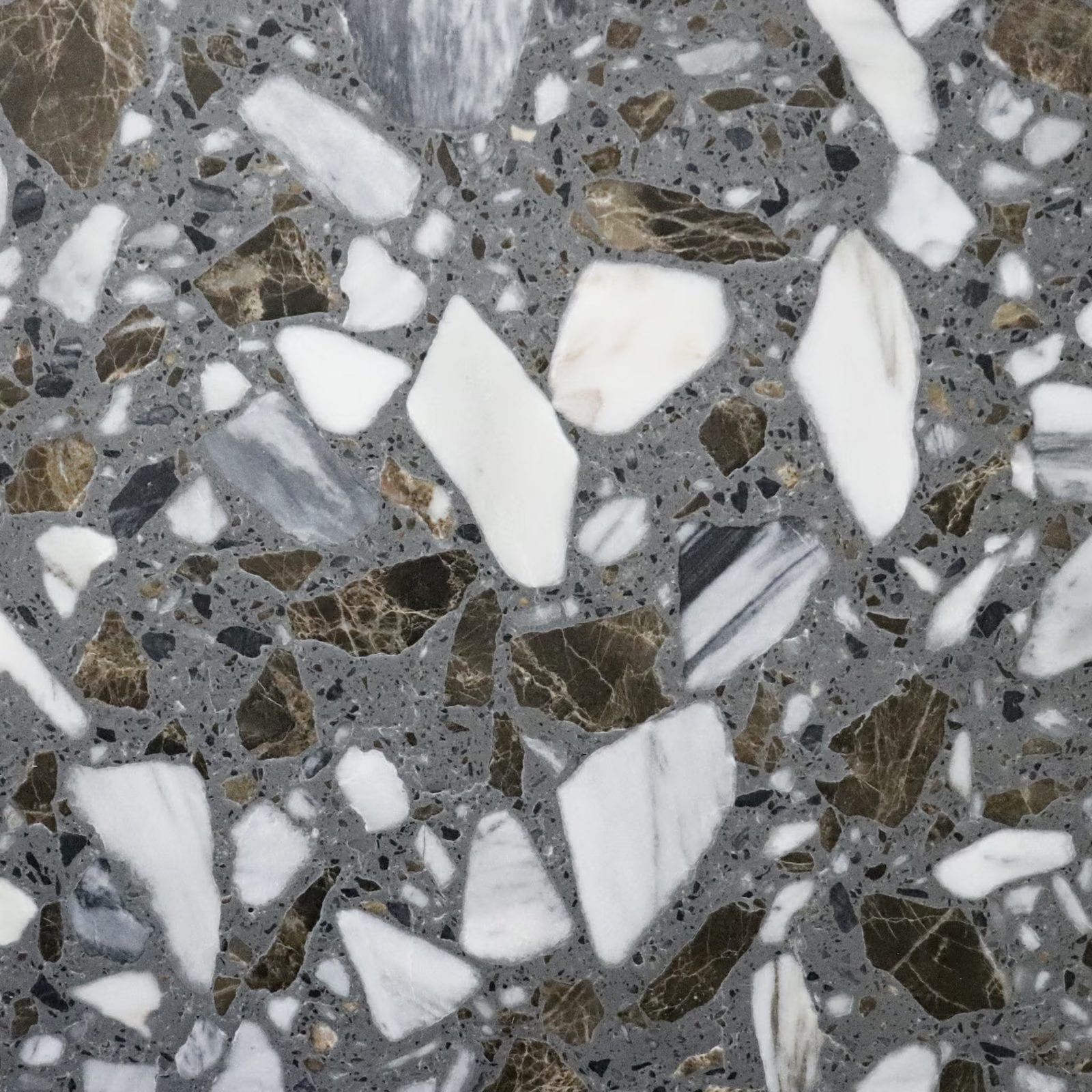
Ruivina Woods
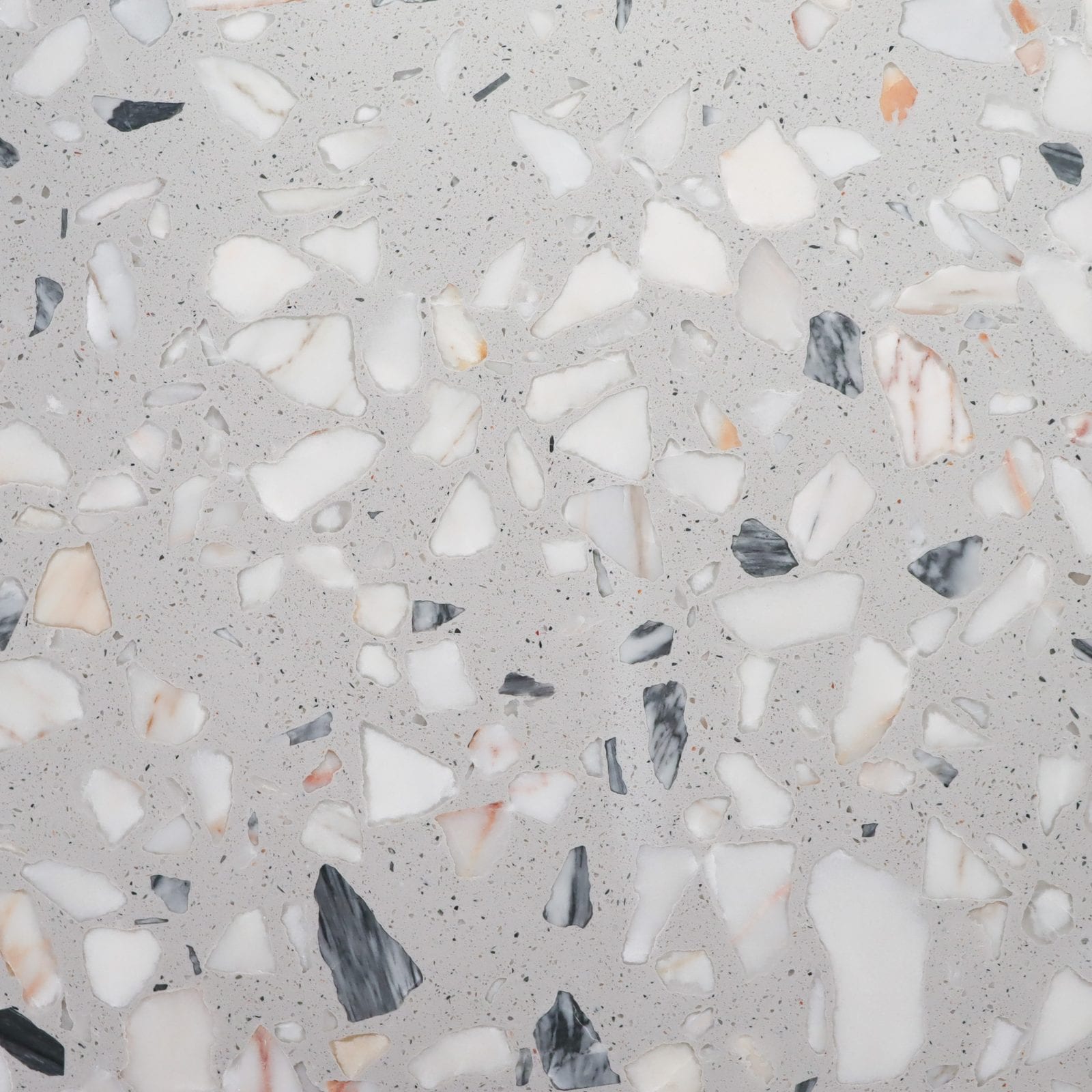
Twister Original
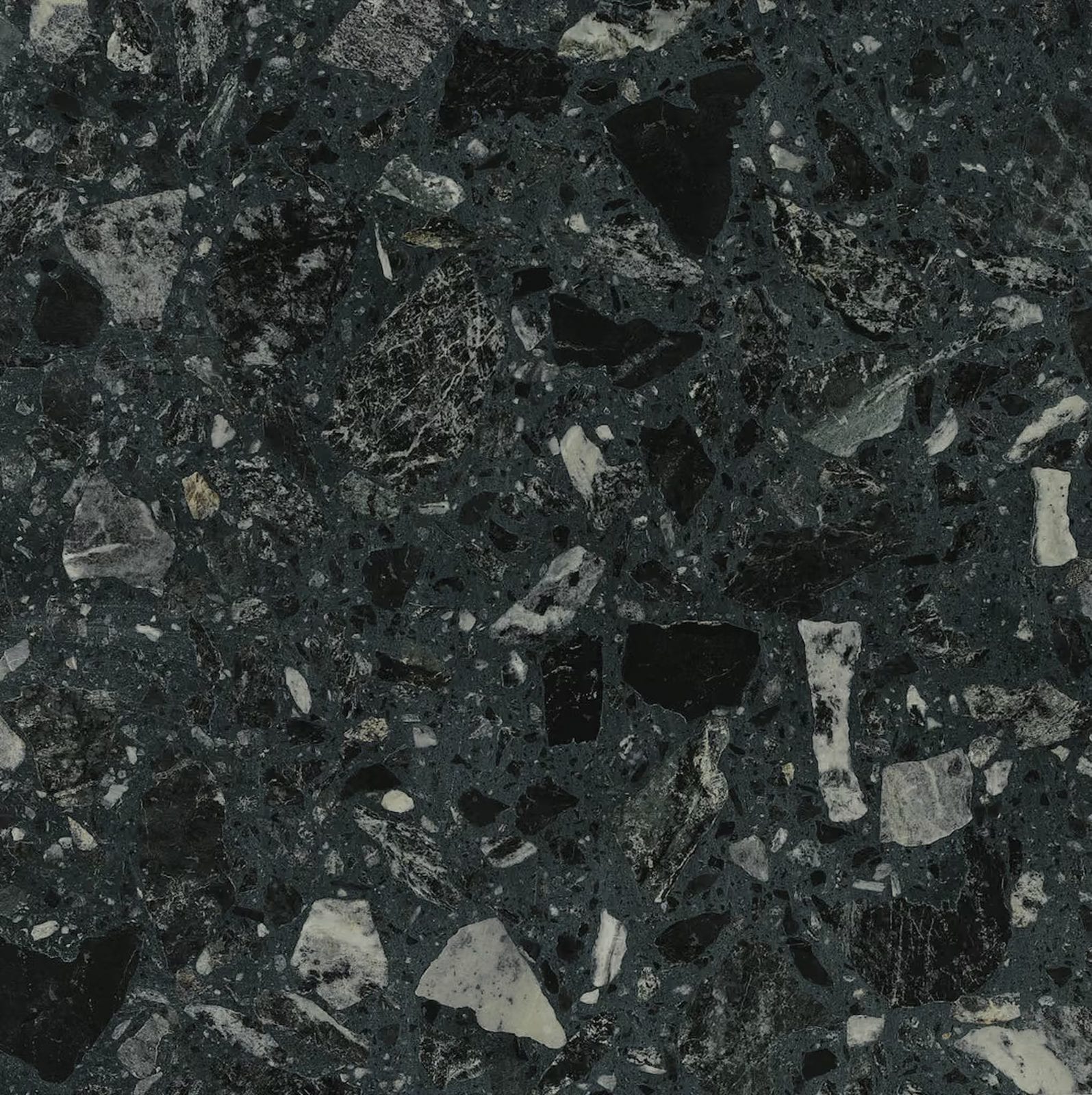
Verde Bragança

Verde Estremoz
What thickness of natural stone for a kitchen worktop?
+
The reference thickness is 3 cm (30 mm) for a kitchen worktop: enough mechanical resistance against pan impacts, stable edges, and the ability to profile a straight edge, fine bevel or ogee. For a massive look, two 3 cm bands can be mitered into a 6 cm overhang. A water and oil repellent is systematic on marble and limestone.
Can marble be used in a bathroom?
+
Yes, provided two points are managed: porosity (repellent treatment every 2-5 years) and acid sensitivity — lemon, wine and limescale removers etch limestone-based marbles like Calacatta or Carrara. Denser marbles such as Nero Marquina or Verde Alpi, along with quartzite and granite, are significantly less sensitive.
What is terrazzo and how does it differ from granito?
+
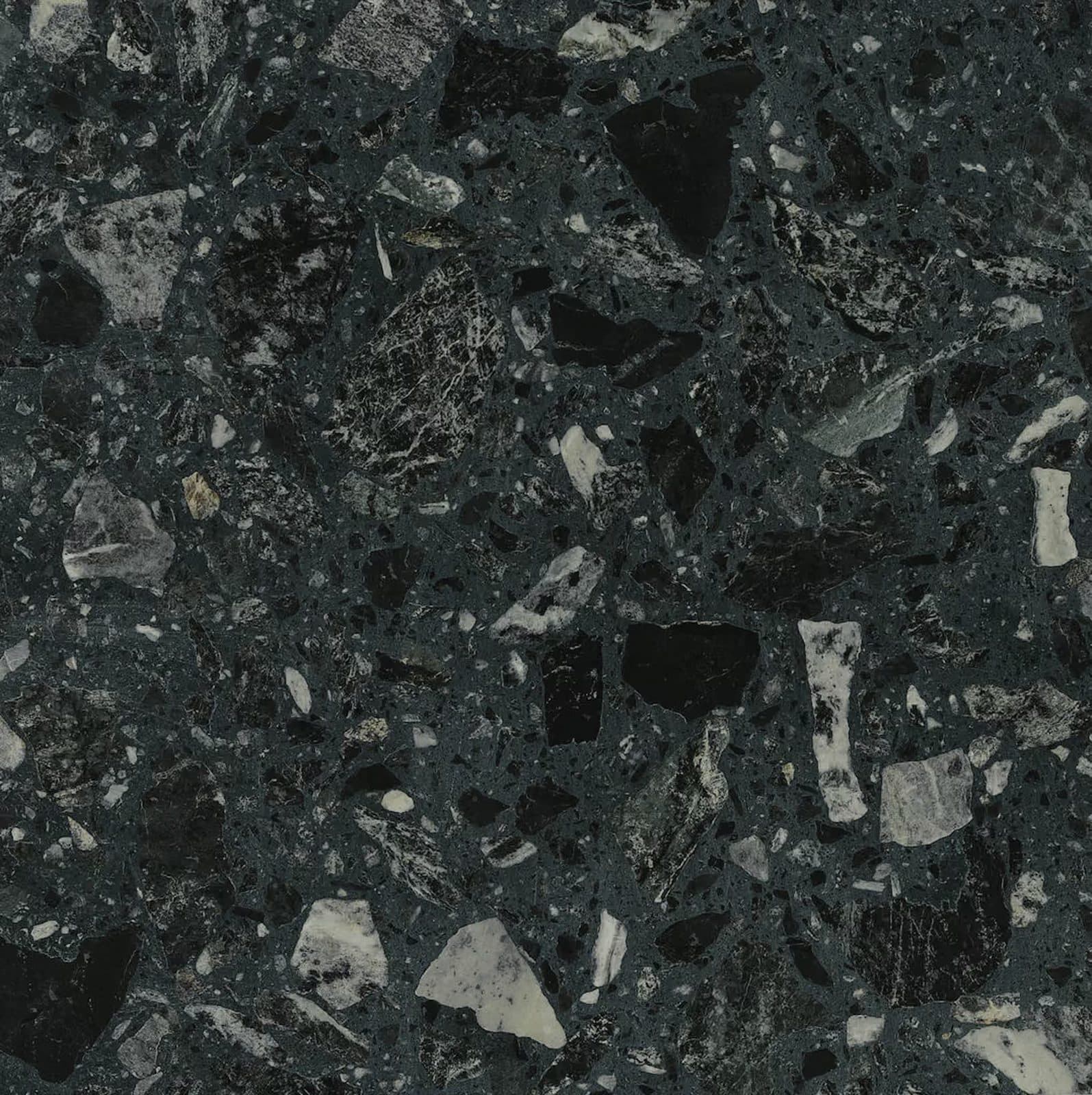
Terrazzo (granito in old French, battuto alla veneziana in Italian) is a cast composite blending a binder (cement or resin) with mineral aggregates — marble, limestone, glass, mother-of-pearl. After setting, the surface is polished to reveal the inclusions. RMC uses a cement binder with named Portuguese marble aggregates (Estremoz, Lioz, Moleanos). Grandinetti still practices the traditional battuto alla veneziana. A tile-equivalent (printed porcelain stoneware with a terrazzo effect) is also available for tighter budgets.
What does a marble worktop cost per square metre?
+
Supplied and fitted prices in Paris range from €350-500/m² for a mainstream marble (Carrara C/D, Thassos) to €1,500-3,000/m² for a Calacatta Oro Extra or an onyx, excluding cutouts and treatments. The price depends on the block, the bookmatch requested, the thickness, the edge detail and the number of upstands. We quote on precise drawings.
Can natural stone be laid outdoors?
+
Yes, some stones are suitable: structured Roman travertine (terrace floors), granite, basalt, quartzite and bluestones (paving and pool coping). Soft marbles (Calacatta, Carrara) are not recommended in freeze zones. Minimum thickness is 3 cm bonded, 4 cm on pedestals. Anti-slip rating (R10 to R12) must be verified for pool decks.
Atelier Matière — materials studio and showroom in Paris, active since 2012. By appointment.