Sanitaryware, fixtures designed like furniture
Basins, freestanding bathtubs, shower trays, countertop and wall-hung washbasins. NIC Design (Italy), Ceramica Cielo (Rome), Clou (Netherlands). Showroom in Paris 16e and 17e. By appointment.
Showroom since 2012 — Paris 16e Passy & Paris 17e Brunel — by appointment
Marine Naccache, Managing Director, Atelier Matière
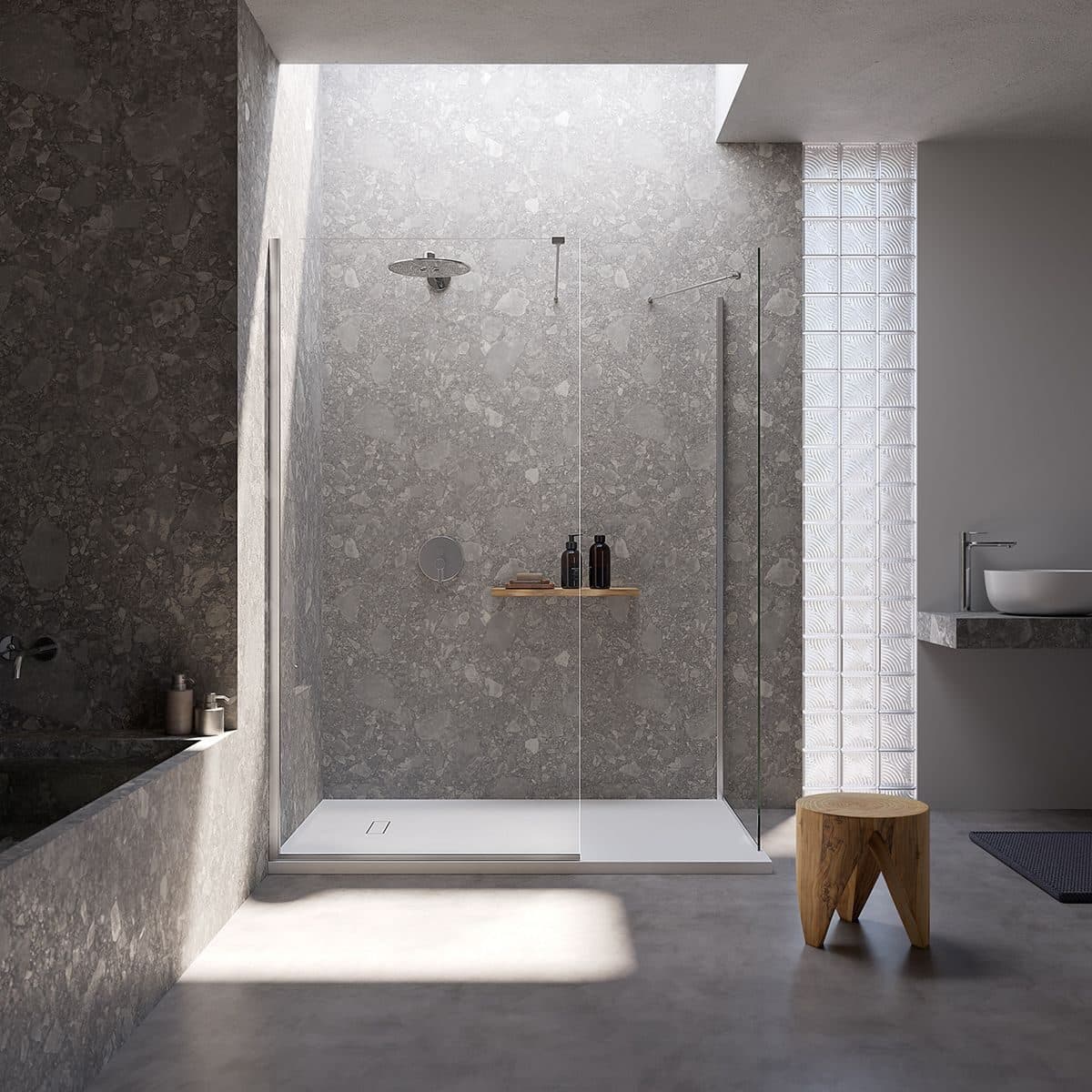
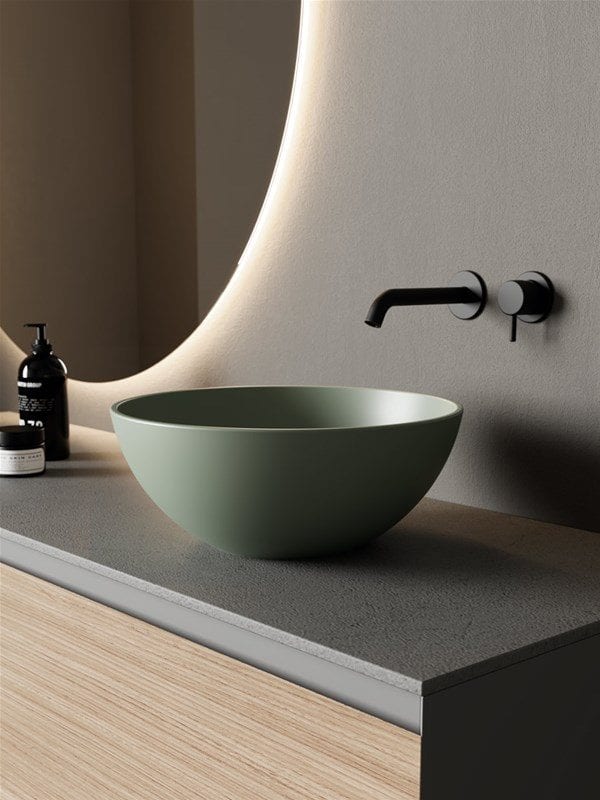
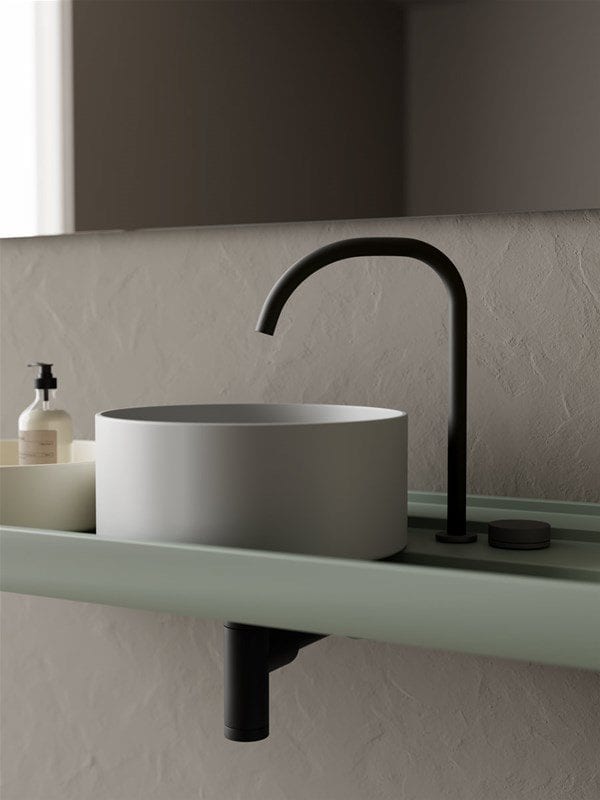
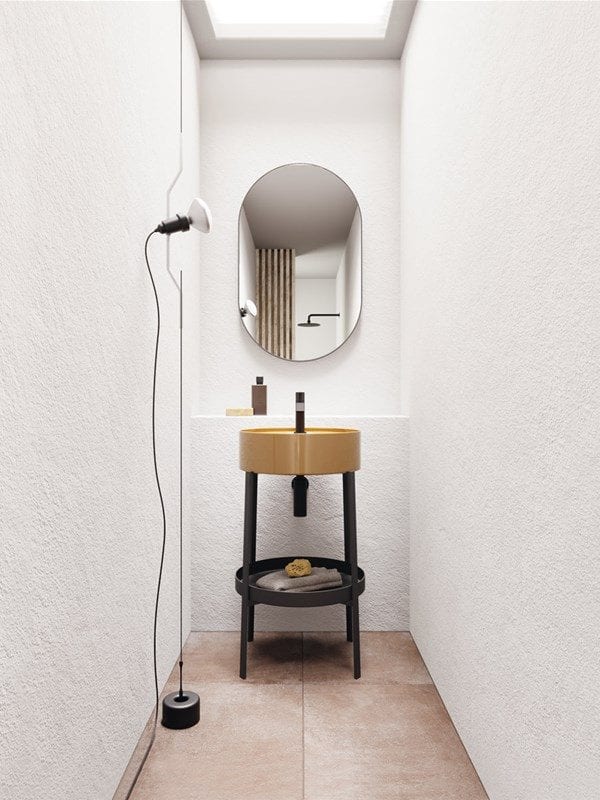
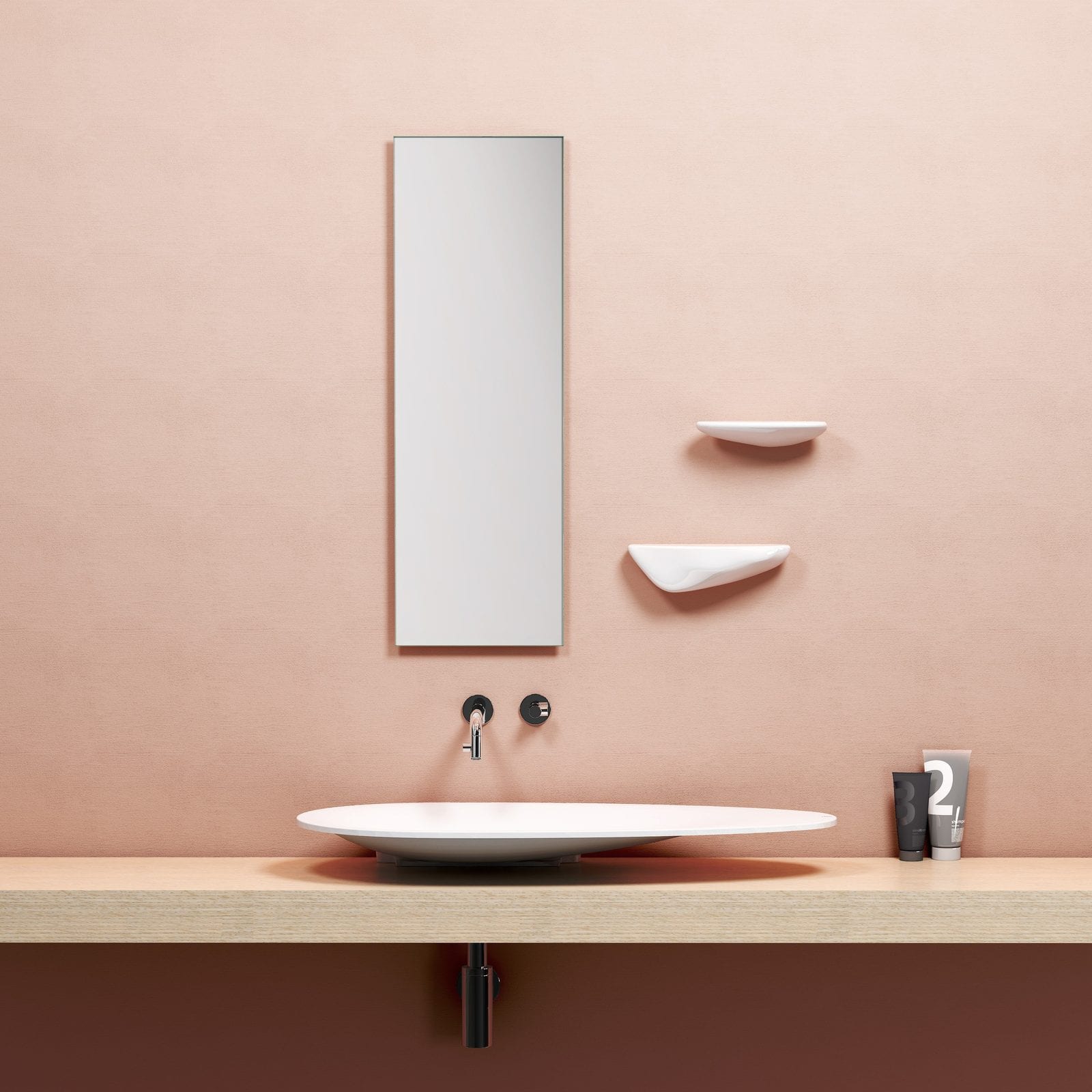
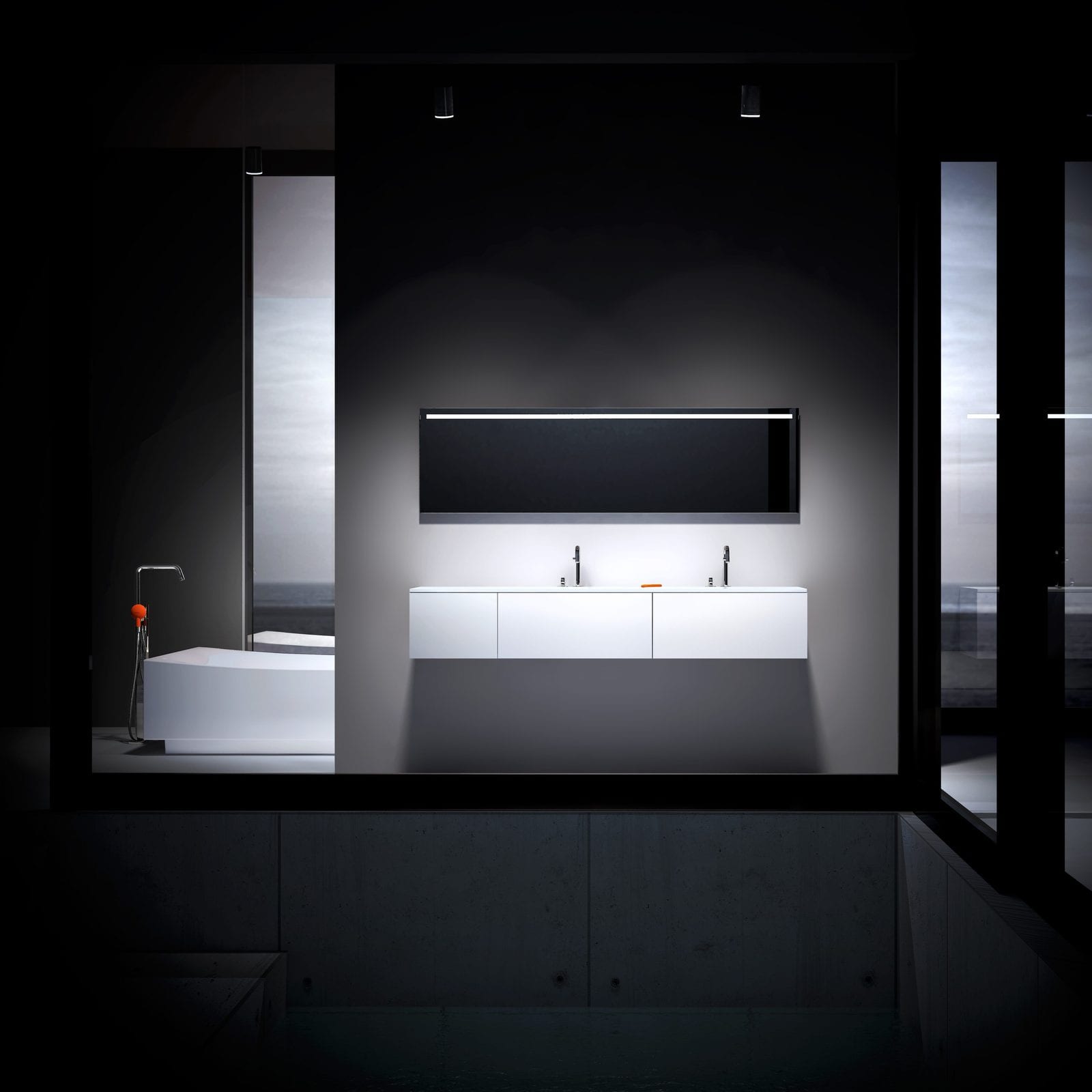
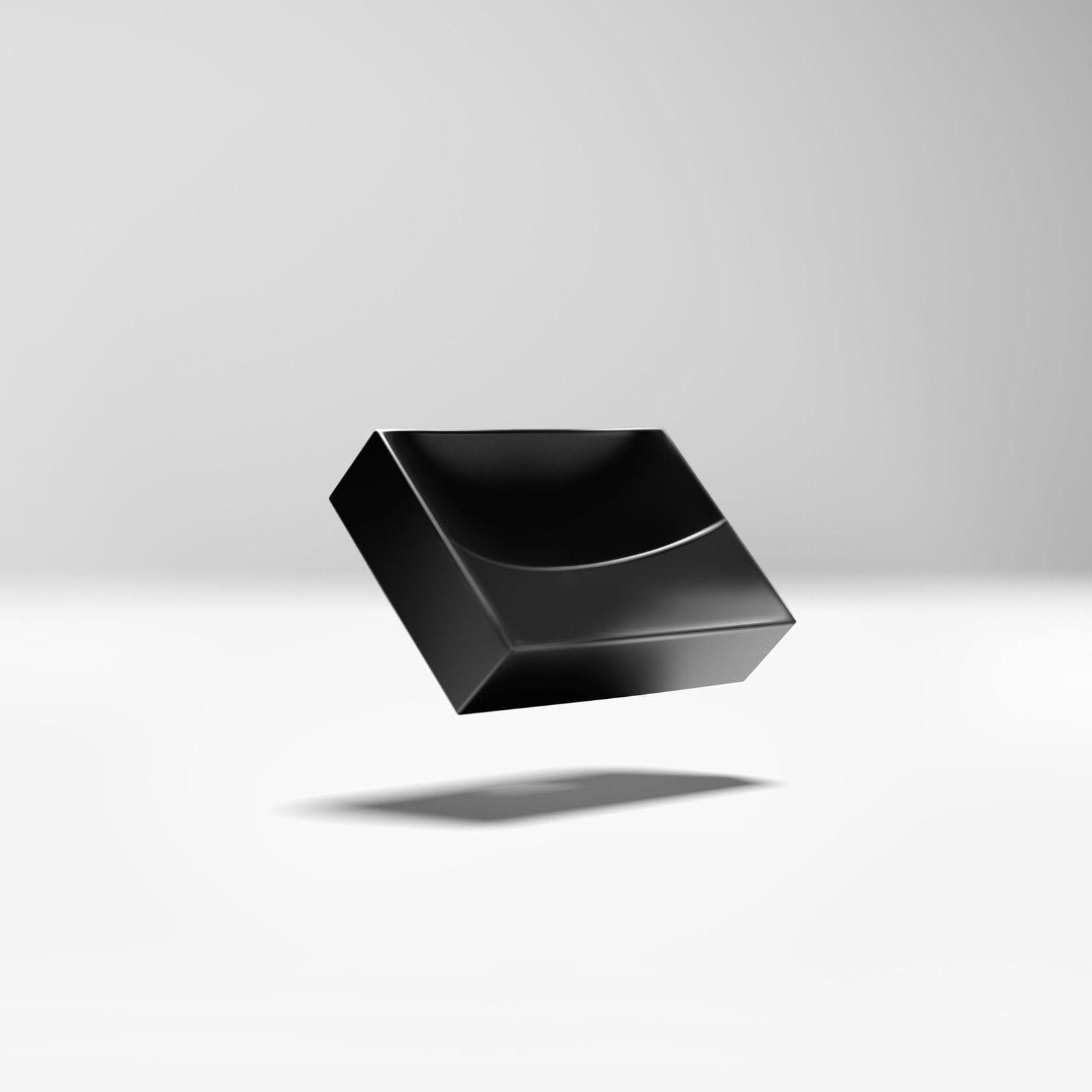
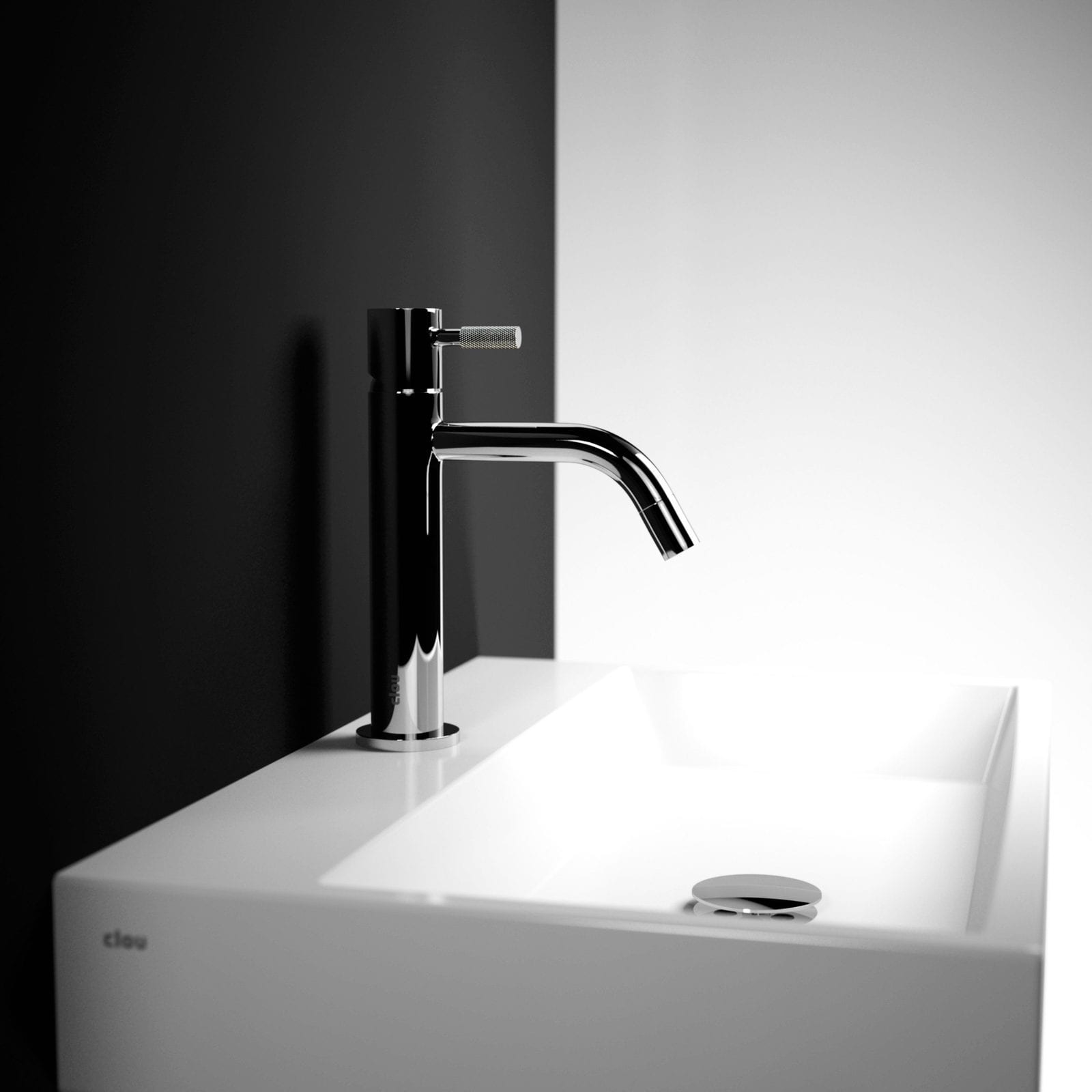
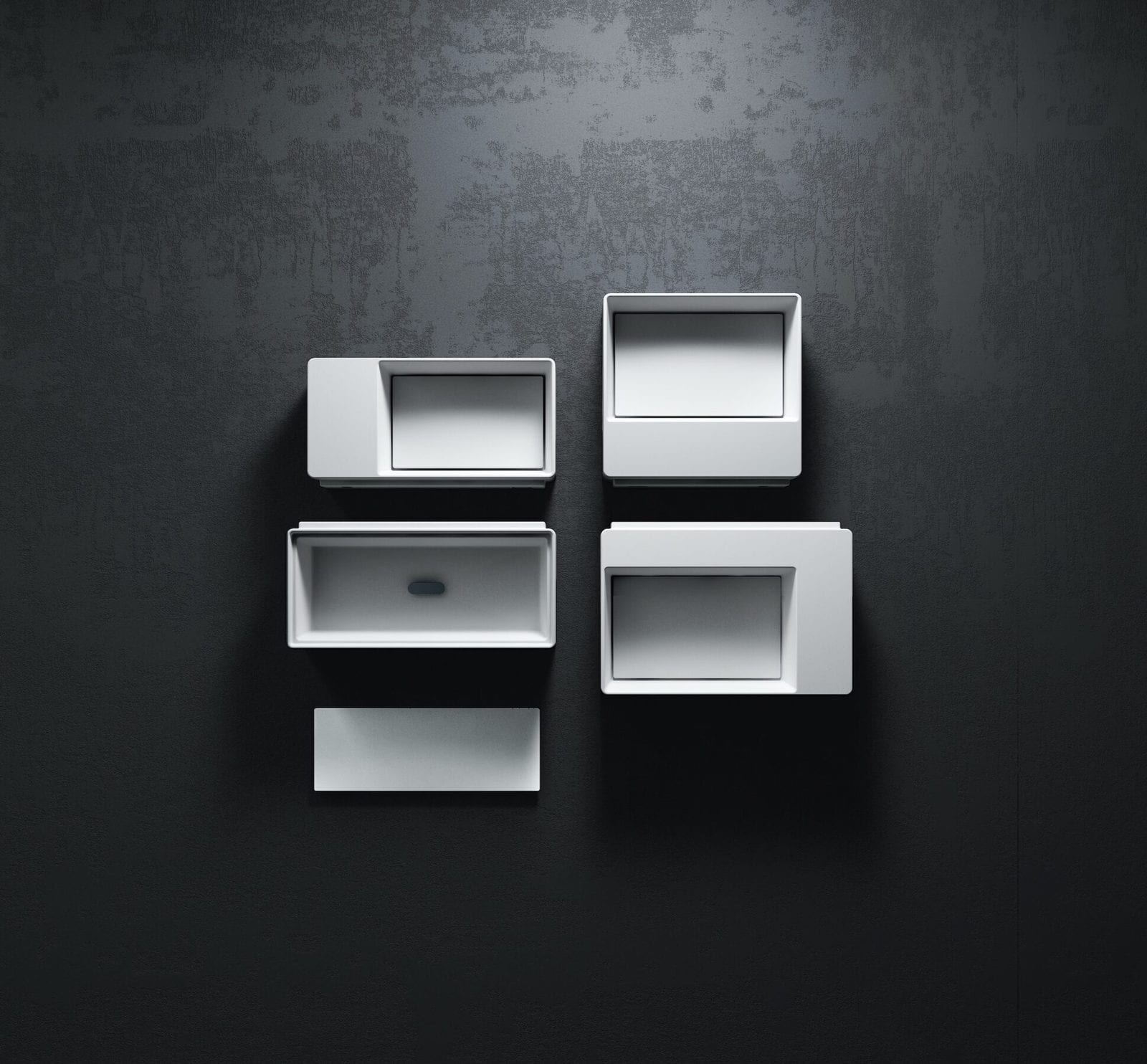
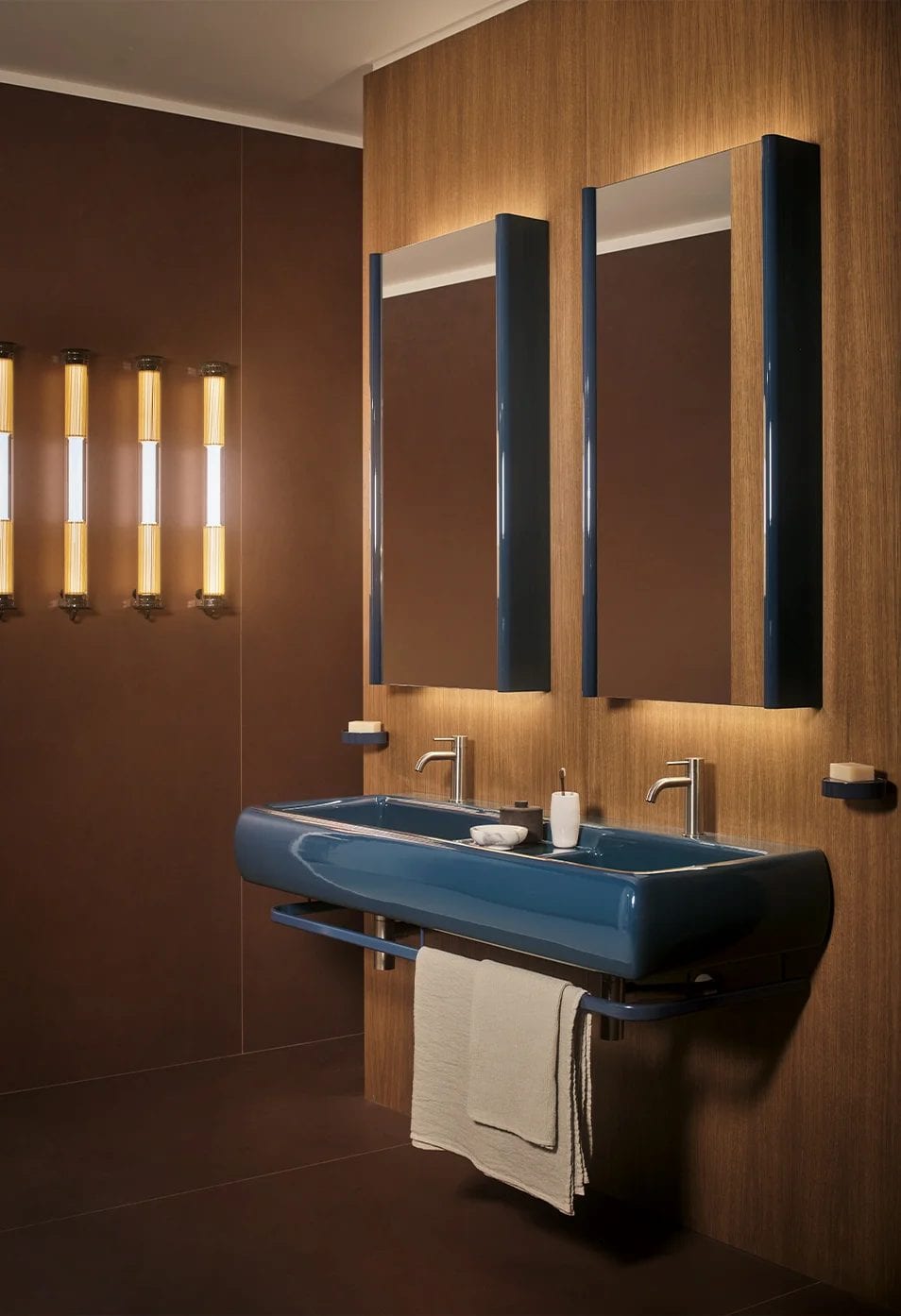
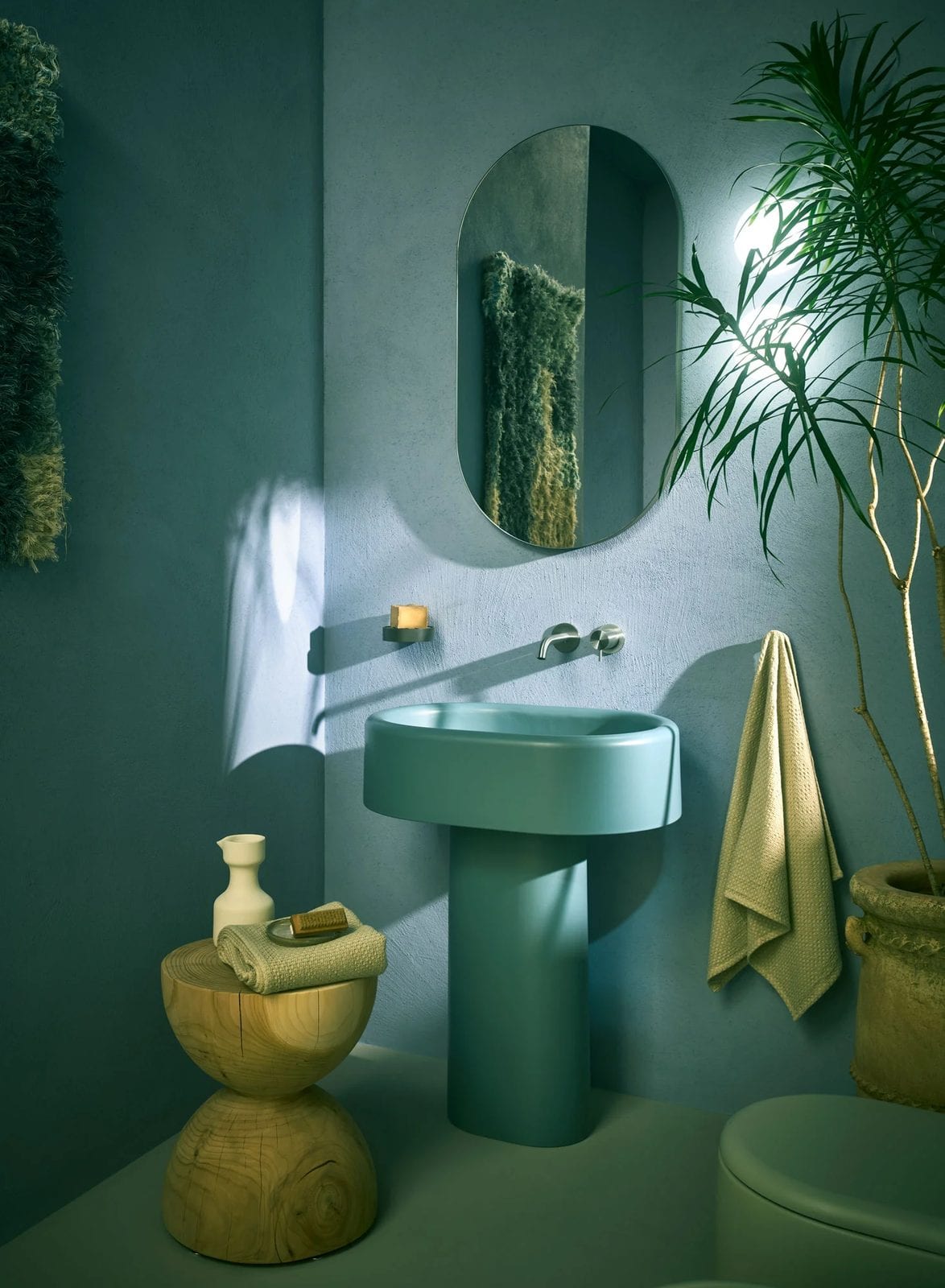
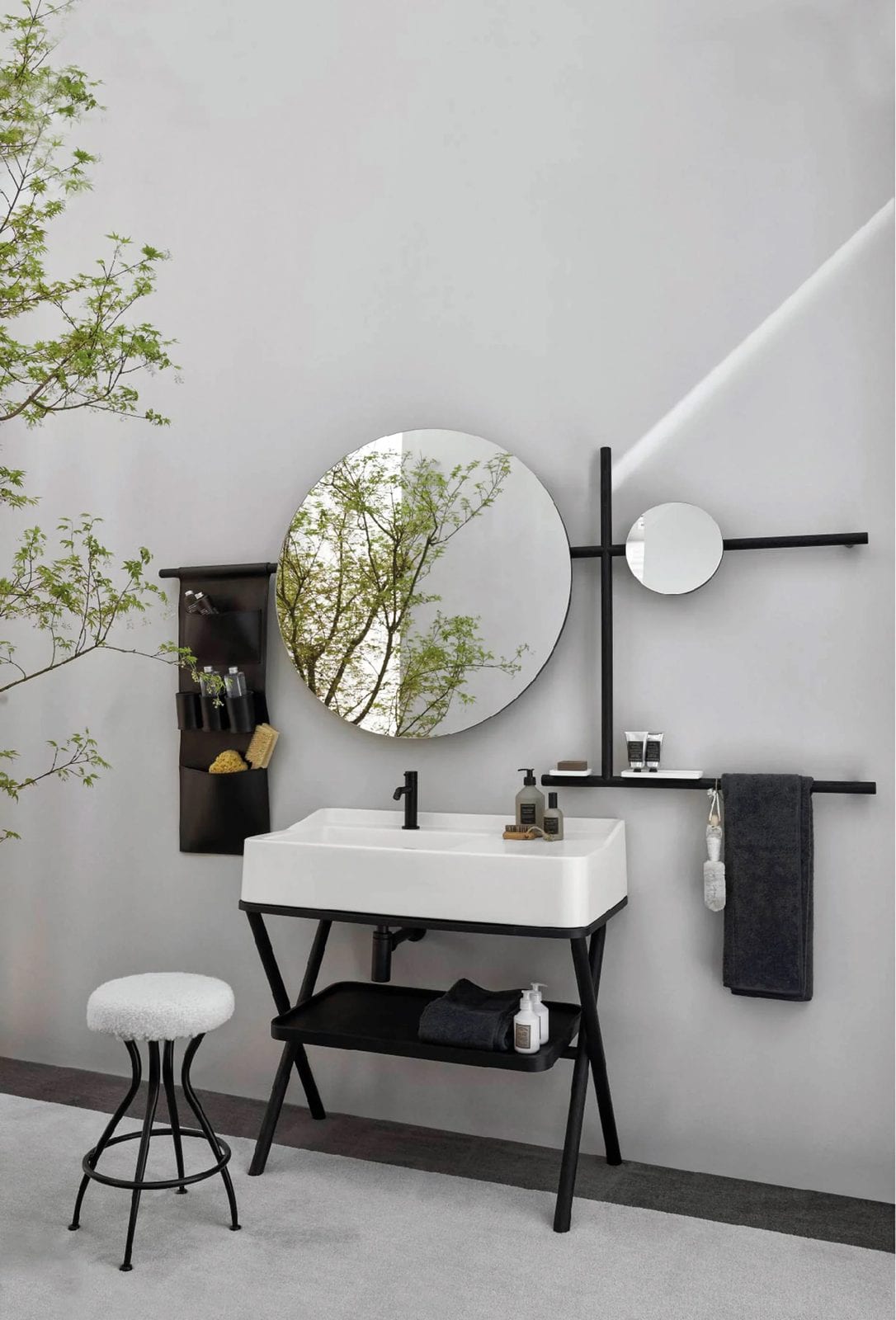
The sanitaryware we distribute is designed like furniture: freestanding countertop washbasins in rectified ceramic from Ceramica Cielo (Shui, Catino, Siwa), freestanding bathtubs in Pivstone (composite stone) by Kyrya, design basins from Clou (First, Kaldur, Hammock), coloured Made in Italy ceramics from NIC Design — enamelled ceramic bathtubs, shower trays and mirrors. The three houses we favour cover every typology: wall-hung and floor-mounted WCs, bidets, semi-recessed washbasins, vanity tops, acrylic and composite stone bathtubs, slim shower trays suitable for tile overlay or in reconstituted stone.
High-end Made in Italy ceramic (Ceramica Cielo, IBD group) currently offers the best balance of design, finish and durability on the market, thanks to high-temperature firing (over 1200°C), optimised wall thickness and a palette of 15 to 20 matt or glossy colours. Composite stone freestanding bathtubs (Kyrya Pivstone) have higher thermal inertia than acrylic and a mineral texture that dialogues with marble and travertine. In our Brunel (17e) showroom, a full sanitary wall displays the collection with mounted vanity tops and a freestanding bathtub in context. For interior architects, decorators and clients, we offer dedicated appointments with coloured ceramic samples.









What is the difference between a countertop basin and a semi-recessed basin?
+
A countertop basin sits fully on the vanity top, total height 10 to 15 cm, with a sculptural freestanding read. A semi-recessed basin is let into the top with only 2 to 4 cm proud, a more discreet daily use. Countertop basins require a tall mixer (spout 20-30 cm); semi-recessed basins accept any standard height.
Acrylic or composite stone bathtub?
+
Acrylic is light (30-50 kg empty), warm to the touch and affordable, but less scratch-resistant. Composite stone (Pivstone by Kyrya, Cristalplant elsewhere) is heavier (120-180 kg), with thermal inertia that holds bath heat, a mineral matt surface and excellent impact and UV resistance. For a freestanding bath at the heart of a contemporary bathroom, composite stone dominates.
What is the standard height for a bathroom vanity top?
+
Standard vanity top height is 85 to 90 cm from finished floor to the top of the counter (excluding countertop basin). With a countertop basin (10-15 cm high), the counter drops to 75-80 cm so the basin rim sits around 90 cm. For an accessible bathroom, 85 cm to the lower rim with 70 cm clear knee space below.
Are wall-hung WCs really easier to clean?
+
Yes, significantly. There is no pedestal and the floor runs uninterrupted under the pan, removing the hardest zone to clean on a floor-mounted WC. The frame (Geberit, Grohe, Villeroy & Boch) is built into the wall and carries up to 400 kg. A Ceramica Cielo wall-hung WC weighs 25-30 kg and cleans in under a minute.
Ceramic, resin or stone shower tray?
+
Enamelled Made in Italy ceramic (Cielo, NIC Design) is the premium option: zero slip, easy to clean, 10 matt or glossy colours, PN12-C anti-slip rating. Resin (Fiora, Marmite) is more flexible for bespoke sizes. Reconstituted stone gives a mineral look but is heavier.
Atelier Matière — materials studio and showroom in Paris, active since 2012. By appointment.